
Anshika Digital Media Institute
Courses
HomeAboutBlogContactStudent Login
Call NowMessage on WhatsApp
Digital Marketing•8 min read•By Vivek Chauhan

SEO vs. PPC vs. Social Media Marketing: Which Skill Should You Learn First?
SEO vs PPC vs Social Media Marketing

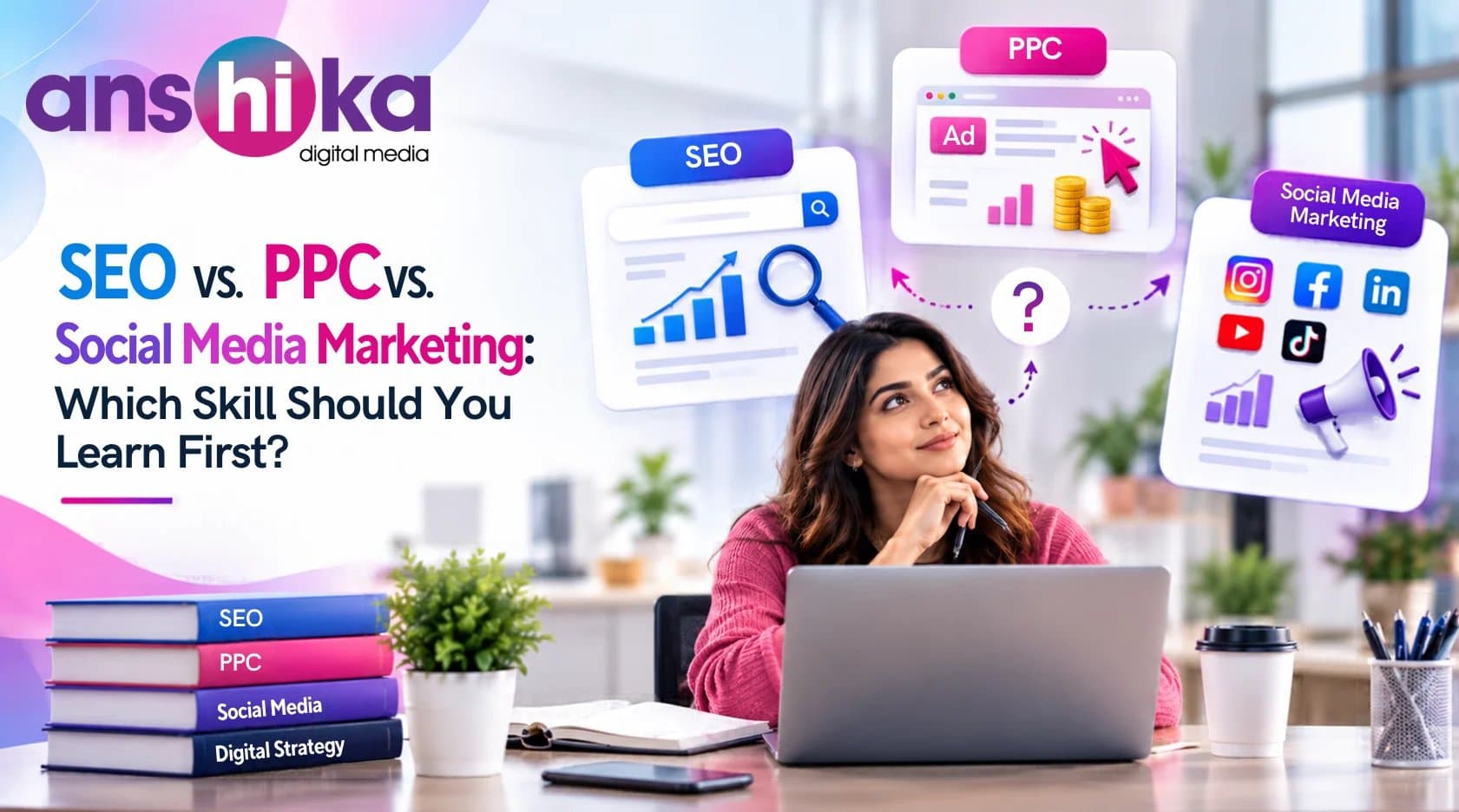
A lot of options make even the most sure person indecisive. So, to choose the right course for you, it helps to understand the different types of digital marketing, including SEO, PPC and social media marketing, and consider which skills best match your interests and career goals. Which should you learn first? As an introduction for newbies, SEO can be helpful since it will teach search intent and how to do keyword research and content planning. However, SEO is just one of many options out there. PPC can be suitable for those who love numbers and fast testing of campaigns, whereas social media marketing suits storytellers. In our guide written by our professional tutors, we compare the three skills, give an explanation about the applicability of each, and give you the correct learning order for the three.

SEO vs. PPC vs. Social Media Marketing: What Does Each Skill Do?

SEO, PPC and social media marketing help businesses reach customers in different ways. SEO attracts visitors through unpaid search results. PPC uses paid advertisements to reach selected audiences. Social media marketing builds visibility and relationships on platforms where people spend their time. Which skill should you pick? Start by understanding what each one actually involves.

Search Engine Optimization (SEO)

Search Engine Optimization (SEO) helps websites appear in relevant search results. You learn how people search, what questions they ask and how websites can answer those questions clearly. SEO work includes keyword research and content optimisation, helping you understand what people search for and how to plan relevant website content around their needs. It also involves improving website structure, checking technical issues and studying performance through analytics. Understanding technical SEO helps beginners learn how to identify website problems that may affect crawling, indexing and search visibility. Imagine a bakery that wants more customers. An SEO specialist might optimise its pages for searches such as "best bakeries near me." The goal is to help people find the business when they need what it offers. SEO suits learners who enjoy research, writing and problem-solving. It also gives beginners a way to practise on a website or blog without buying advertising. Results take time, though. Google does not hand out rankings just because you asked nicely.

Pay-per-click (PPC)

Pay-per-click (PPC) advertising lets businesses pay for clicks on their advertisements. Google Ads is one common platform. Advertisers choose targeting options and budgets, create ads and measure what happens after someone clicks. A well-planned ads strategy helps align audience targeting, messaging and spending with the campaign's business objectives. PPC specialists work on campaign structure and keyword targeting. They also monitor bids and conversion tracking to understand whether campaigns meet their goals. Consider a bakery launching a weekend cake offer. A paid search campaign can help it reach people searching for cakes in its area. Unlike SEO, PPC can generate visibility soon after a campaign goes live, provided the campaign qualifies to serve. PPC suits people who enjoy numbers and testing. You must also manage budgets carefully because paid traffic can become expensive when campaigns target the wrong audience. Improving keyword relevance, ad quality and targeting can help advertisers work towards strategies to reduce cost per click without sacrificing traffic quality.

Social Media Marketing (SMM)

Social media marketing helps businesses attract attention and build relationships through platforms such as Instagram, Facebook and LinkedIn. The work goes beyond posting attractive pictures. You plan content and create posts or videos. You respond to comments, study engagement and learn which topics matter to your audience. For our bakery, a social media marketer might publish cake-decorating videos and customer stories. Those posts can introduce the brand to people who were not actively searching for a bakery. This skill suits creative learners who enjoy communication and visual storytelling. However, a viral post is not a business plan. You still need a clear audience and a reason for people to take action.

Which Digital Marketing Skill Should You Learn First?

SEO is a useful first skill for many beginners, but it is not the right starting point for everyone. Your choice should depend on your interests and career goals as well as the resources available to you.

Why SEO Can Be a Useful Starting Point for Beginners

SEO teaches you to understand search intent. That means learning why someone searches for a particular phrase and what answer they expect to find. Suppose someone searches for "affordable running shoes." They may want product comparisons rather than a history of running shoes. Understanding that difference helps you create useful content. You also learn keyword research and website content planning. These skills transfer to PPC because advertisers need to understand the phrases people use. They can also improve social media content because audience questions often inspire relevant posts. Another advantage? You can practise SEO without paying for clicks. Start with a small website or blog and learn to improve its content. You will need time and effort, but your practice does not depend on an advertising budget.

When PPC Makes More Sense as Your First Skill

Are you more interested in campaign performance than writing articles? PPC might be a better starting point. PPC introduces you to audience targeting and campaign budgets. You learn to write ad copy and measure actions such as enquiries or purchases. These fundamentals are essential when learning how to run successful PPC campaigns that focus on meaningful results rather than clicks alone. These skills suit learners interested in performance marketing and measurable business outcomes. You can begin by studying Google Ads and building a sample campaign plan. Practise selecting keywords and writing advertisements before spending money on live campaigns. Remember, an advertisement can receive plenty of clicks without generating sales. Learning to assess conversion quality matters more than celebrating a busy traffic chart.

When Social Media Marketing Is the Better Starting Point

Social media marketing may suit you if you enjoy making videos and writing captions or interacting with people online. You can practise by creating a content calendar for a fictional business. Plan a mix of educational posts and product demonstrations as well as audience questions. Then explain why each post belongs in the plan. This approach helps you learn content planning and platform-specific communication. You can also study engagement to understand which posts attract meaningful responses. Do not confuse frequent posting with effective marketing. Publishing five posts a day will not help much if none speaks to the intended audience.

How Your Career Goal Should Shape Your Decision

Choose your first skill based on the work you want to do. ⦿ SEO executive: Start with keyword research and on-page SEO, then learn technical basics and analytics. ⦿ PPC or performance marketer: Focus on campaign structure and audience targeting along with bidding and conversion tracking. ⦿ Social media executive: Practise content calendars and creative production as well as engagement reporting. ⦿ Digital marketing generalist: Learn SEO fundamentals first, then add PPC and social media marketing. This order offers a practical starting point rather than a rigid career rule. If your goal is to become a PPC specialist, you do not need to master every SEO task first.

Common Mistakes Beginners Should Avoid When Choosing a Digital Marketing Skill

Learning becomes easier when you avoid a few common traps. You do not need every marketing tool on your laptop before you can begin.

Expecting Immediate Results from Every Channel

SEO often takes time to build visibility. PPC can generate traffic quickly, but that does not guarantee conversions. Social media engagement also varies with content and audience behaviour. Set realistic goals for each channel. Judge progress using the metrics that match your objective instead of expecting every campaign to produce instant sales.

Learning Tools Without Understanding Marketing Fundamentals

Knowing where to click in an advertising dashboard is useful. Knowing why you are targeting an audience is more important. Learn the basics of customer intent and messaging first. Then use tools to apply those ideas. Otherwise, you may build a polished campaign that reaches the wrong people.

Switching Skills Before Building Practical Experience

A new marketing trend can make your current learning path seem outdated overnight. Resist the urge to restart every week. Choose one skill and complete a practical project before moving on. Then add a second skill that complements your first. Consistent practice usually teaches more than collecting course certificates without applying what you learn.

Conclusion

In the SEO vs PPC vs Social Media Marketing debate, SEO is often a useful starting point because it teaches search intent and content planning. PPC may suit data-focused learners, while social media marketing appeals to creative communicators. Choose according to your goal, practise with a real project and build additional skills over time. You do not need to learn everything today. You need a sensible first step.

Frequently Asked Questions

(FAQs)

1. Can You Learn SEO, PPC and Social Media Marketing Without Coding?

Yes. You can learn the fundamentals of all three without being a developer. Basic technical knowledge helps with SEO, while tracking tools and platform skills support PPC and social media work.

2. How Long Does It Take to Become Proficient in SEO or PPC?

The timeline depends on your practice and the complexity of the work. You can learn basic concepts in weeks, but developing sound judgement requires practical experience and continued learning.

3. Can You Practise Digital Marketing Without Working with a Client?

Yes. Use a personal website or create a sample business project. You can practise content planning and campaign structures without claiming results for a real client.

4. Which Digital Marketing Skill Is Best for Freelancers?

It depends on the services you want to offer. SEO can suit content and website projects, PPC can suit campaign management, and social media marketing can suit content creation and audience engagement. Combining related skills can expand your service options.

5. Should You Learn Google Analytics Before Starting PPC?

You should understand the basics of measurement before managing campaigns. Learn how analytics and conversion tracking work so you can assess meaningful outcomes rather than clicks alone.

About the Author

Vivek Chauhan is an expert at Anshika Digital Media sharing valuable insights on design, marketing, and digital education.

SEO vs PPC vs Social Media Marketing: Which to Learn First?